Contents:
- Probability of a simple event
- Probability of an event, given another event
- Probability of an event not happening
See also:
Probability of two events occurring together.
Probability of a simple event happening: Overview
Simple events in probability have a certain chance of happening. For example, a 10% chance of rain today. When two or more probabilities are possible, they are added together to get the total probability. A 10% chance of snow and a 15% chance of hail would mean a 10% + 15% = 25% chance of bad weather. This article will show you how to find the probability of a simple event happening.
If you have another question type, check out the Probability Index for more question types, like multiple events at once.
Probability of a simple event happening: Steps
 Sample problem #1: In a recent survey, fifty percent of families in the US have no children living at home. Twenty two percent have one child. Twenty two percent have two children. Four percent have three children. Two percent have four or more children. If a family is selected at random, what is the probability that the family will have three or more children?
- Step 1: Identify the individual probabilities and change the percents to decimals. The question asks about the probability of a family having three or more children. In other words, you are looking for how many families have three or four children.
Four percent of families have three children, and 2% have four or more children. Our individual probabilities (as decimals) are .04 and .02. - Step 2: Add the probabilities together.
.04 + .02 = .06.
The probability is .06 or 6%.
You’re done!
Sample problem #2: According to a 2013-2014 survey for the Humane Society, people owned 95.6 million cats.
- 46 percent—Percentage of owners with one cat.
- 31 percent—Percentage of owners with two cats.
- 23 percent—Percentage of owners with three or more cats.
If a cat owner is selected at random, what is the probability that the family will have fewer than three cats?
- Step 1: Identify the individual probabilities and change the percents to decimals. The question asks about the probability of a cat owner having fewer than three cats. In order words, you want to find how many cat owners have one or two cats.
46 percent have one cat and 31 percent have two cats. Our individual probabilities (as decimals) are .46 and .31. - Step 2: Add the probabilities together.
.46 + .31 = .77.
The probability is .77, or 77%.
You’re done!
Probability of an Event, Given Another
Probability of an Event, Given Another Event: Overview
If you’re faced with a question about the probability of an event, given another event, what these problems are really asking you is “given a certain situation, what is the probability that something else will happen?” For example:
- If I drive, what are my chances of having an accident?
- If I fly, what are my chances of a flight delay?
These are called dependent events. If you are unsure whether or not you have a dependent event, see: Dependent or independent? This how-to will guide you through the short set of steps to finding the probability for dependent events.
Probability of an Event, Given Another Event: Steps

Sample question: Find the probability that the answer was no, given that the respondent was male.
Survey Results
| Gender | Yes | No | Total |
|---|---|---|---|
| Male | 15 | 25 | 40 |
| Female | 10 | 50 | 60 |
| Total | 25 | 75 | 100 |
- Step 1: Find the number for both the events in the question happening together. In our sample, question, we were asked for the probability of no + male. From the table, the number of males is 25.
- Step 2: Divide your answer in step 1 by the total figure. In our example, it’s a survey, so we need the total number of respondents (100, from the table).
25 / 100 = 0.25 - Step 3: Identify which event happened first (i.e. find the independent variable). In our example, we identified the male subgroup and then we deduced how many answered no, so “total number of males” is the independent event. The question usually gives this information away by telling you “given that the respondents were male…” (as in our question).
- Step 4: Find the probability of the event in Step 3. In our example, we want the probability of being a male in the survey. There are 40 males in our survey, and 100 people total, so the probability of being a male in the survey is 40 / 100, or .4.
- Step 5: Divide the figure you found in step 2 by the figure you found in step 4.
.25 / .4 = 0.625
That’s it!
How to calculate the probability of an event NOT happening
How to calculate the probability of an event NOT happening: Overview
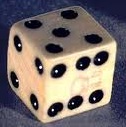
Probability questions are often word problems that appear more difficult than they actually are. The trick is to identify the type of problem you have. This article will tell you how to find the probability of a simple event not happening. You can also check out the Probability Index for more question types.
How to calculate the probability of an event NOT happening: Steps
- Step 1: Choose one of the following sample questions below that most closely matches your problem and go to the step indicated. Pay particular attention to the bold words when selecting.
- In a certain year, 12,942 construction workers were injured by falling debris. The top six cities for injuries were: New York 141, Houston 219, Miami 112, Denver 140, and San Francisco 110. If an injured construction worker is selected at random, what is the probability that the selected worker will have been injured in a city other than Houston, Miami, or Denver? If your problem looks like this, go to step 2.
- If the probability that a major hurricane will hit Florida this year is 0.49, what is the probability of a major hurricane not hitting Florida this year? If your problem looks like this, go to step 5.
- Twenty seven percent of American adults support Universal Health Care. If an American adult is chosen at random, what is the probability they will not support Universal Health Care? If your problem looks like this, go to step 6.
- Step 2: Add up the given cities.
Houston (219) + Miami (112) + Denver (140) = 471 - Step 3: Divide the number you found in step 2 by the total number of people or items given. In this case, we were told that 12,942 construction workers were injured. So:
471 / 12,942 = .0364. - Step 4: Subtract the number you found in step 3 from 1 (that is, the number one, not step 1).
1 – .0364 = 0.9636(rounded to four decimal places).You’re done! - Step 5: Subtract the “not” probability from 1.
1 – 0.49 = 0.51. That’s it! - Step 6: Convert the percentage to a decimal.
Twenty seven percent = 0.27 - Step 7: Subtract the number in step 6 from 1 (that is, the number one not step 1!).
1 – 0.27 = 0.73.That’s it–you’re done!
Check out our YouTube channel for more stats help and tips!
References
Humane Society. Pets by the Numbers. Retrieved November 13, 2018 from: http://www.humanesociety.org/issues/pet_overpopulation/facts/pet_ownership_statistics.html